Video revived the radio star

Ok, trying to be clever with the headline here, it’s the ‘podcast star’ technically, but hope you get the 80s song reference!
For a long while now, podcast have shift from audio only to video. In one of my favourite podcasts, The Rest is Entertainment, host Marina Hyde goes as fair as saying that they really should be call a show these days, rather than a podcast. And you can’t really call people listeners either, with 72% preferring to watch the video version of a podcast.
Last year we talked about the visual shift trend. Our appetite for visual content formats is growing and video podcasts are attracting more and more people, so much so, big industry moves are happening:
- Netflix wants 50+ podcast shows on its platform – attempting to woo creators away from YouTube
- Spotify is changing its eligibility standards to increase in creators
- UK media giant Global has taken a major stake in Gary Neville’s sports podcast company The Overlap
What does this tell us, video podcast?
Podcasts are becoming shows
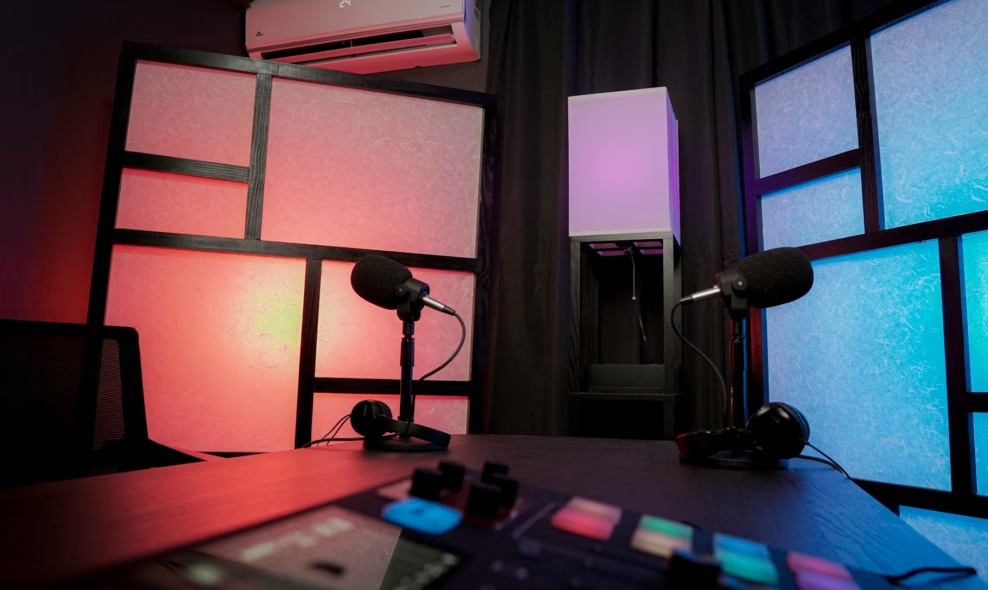
We’re moving beyond the days of two people chatting into microphones in a spare room. Creators are investing in set design, multi-camera setups, live audience segments, and dynamic editing. The line between podcast and talk show is blurring, and audiences now expect something that looks and feels a bit more polished.
The battle for eyeballs (not just ears) is intensifying
Platforms know that video increases engagement, watch time, and ad revenue. YouTube has dominated video podcasting for years, but Netflix and Spotify clearly want a piece of that. As more platforms compete, creators will have more options and potentially more pressure to choose a “home” for their video content.
It opens the door to new genres and new forms of storytelling
Video allows for demonstrations, reactions, live visuals, graphics, guests joining remotely, behind-the-scenes formats, product walk-throughs, and more immersive storytelling overall. The medium is expanding what a “podcast” can actually be.
Brands and creators need to rethink their strategy
For brands, this shift means:
- Stronger audience connection through faces and body language
- Higher production expectations and investment
- More channels for repurposing content (shorts, reels, trailers)
For creators, it means that the entry barrier is rising. You now need to consider lights, cameras, editing skills, and distribution know-how. But the potential reach is bigger than ever.
So where is this heading?
If audio podcasting democratised broadcasting, video podcasting is democratising TV. Anyone with the right setup can create a show that looks like it belongs on a major network.
And maybe Marina Hyde is right, we should ditch the word podcast altogether. But until we come up with a better name, the evolution continues. The radio star isn’t the only one being revived.
Sign up to our weekly and monthly reads
Receive our weekly roundup of the top technology and business media stories and reputational advice as well as our insightful views on topics in the communications and technology space.

 11.03.2026
Five Steps to Shaping Your Reputation Strategy
 11.03.2026
Brands need to be looking beyond International Women's Day
 11.03.2026
Here's what the Inside PR 2026 Report tells us about the state of the industry
 19.01.2026
How to truly own the narrative
 19.01.2026
Why you should never underestimate a comms professional
 17.11.2025
The Christmas ad season has arrived - and it’s telling us something important
 17.11.2025
Four shifts shaping PR in 2026
 17.11.2025
How PR in Europe really works
 15.10.2025
Smarter, safer, or just louder? How AI comms must change in 2026
 15.10.2025
Why every company needs a crisis communications handbook
 15.10.2025
How to write a PR brief that gets results in 2026
 05.09.2025
The deeply human joy of puzzles – and what it means for communicators
 21.07.2025
When AI eats itself, what’s the future of content?
 21.07.2025
Salt in the wound – When storytelling crosses a line
 21.07.2025
What we’re loving this summer for tech PRs
 13.05.2025
What a celebrity space flight taught us about PR
 13.05.2025
Generative Engine Optimisation: The PR-led discipline reshaping brand visibility
 13.05.2025
Is the future faceless leadership?
 12.02.2025
Cancelled? There’s Cover for That
 12.02.2025
The year of the uncomplicated
 22.11.2024
My first encounter with an AI hallucination
 25.10.2024
Why AI won’t be taking over from PR
 25.10.2024
Building a strong reputation in Europe – a comms checklist
 23.07.2024
Strategic PR planning – how to prepare for the summer slowdown
 22.05.2024
Is VR growing up?
 30.04.2024
Spokespeople – navigating the social media tight rope
 20.03.2024
Does cybersecurity have a comms problem?
 12.03.2024
Setting Sail: Navigating the Business Seas with Reputation
 02.03.2024
Avoiding the pitfalls of impulsive PR
 04.02.2024
From potato to progress: Addressing communication breakdowns
 02.12.2023
Realistic Resolutions that Stick
 18.10.2023
The powerful comms combo between strategy and creativity
 06.10.2023
The Rise of the Tech “LinkedInfluencer”
 08.02.2023
Is the de-influencer movement another reputational hazard?
 02.02.2023